How Urgency Can Trigger the Thought Storm Loop
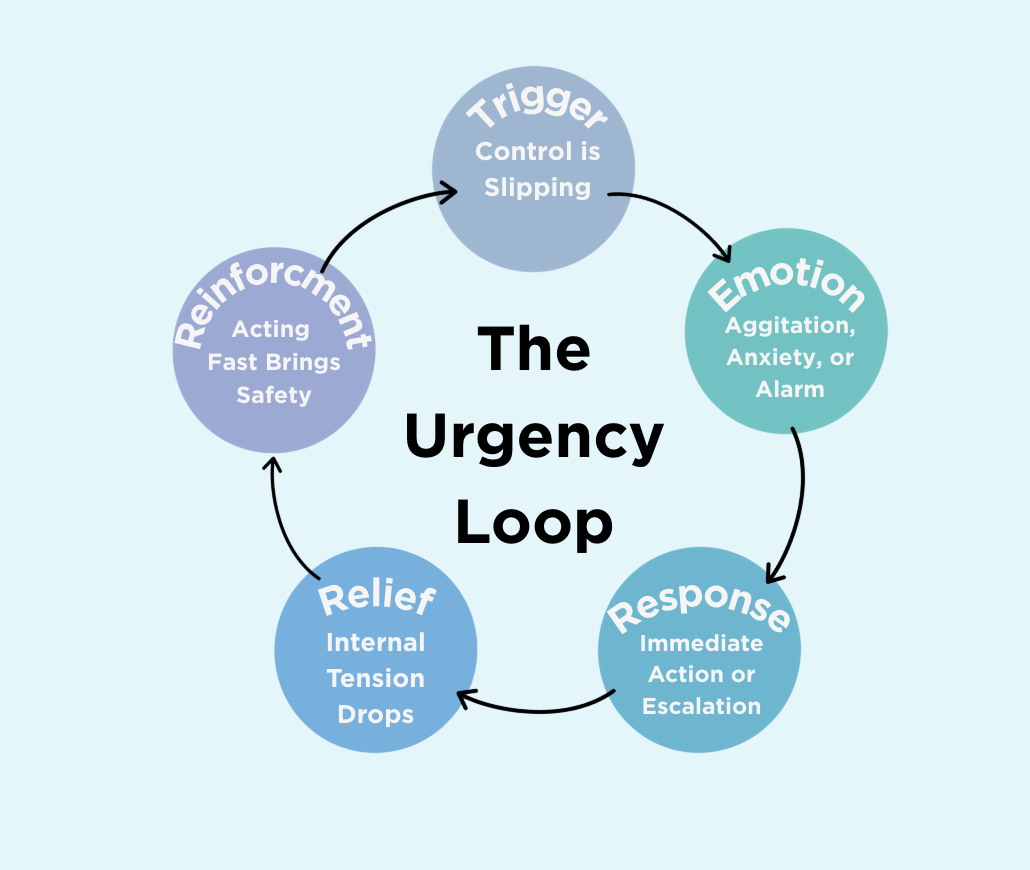
When the urgency loop settles, guilt often follows. You may replay your words, tone, or actions and wonder, “Why did I react like that?” Instead of feeling the emotion, you start thinking about it — activating the Thought Storm Loop.
What happens:
-
You replay the conversation over and over in your mind, going back through what was said and how it unfolded.
-
You analyze tone, wording, timing, and small details, wondering if you said the right thing or if something came out wrong.
-
You mentally rehearse what you should have said, what you might say next, or how you could explain yourself better if the conversation comes up again.
-
Your thinking becomes so active that it’s hard to take the next step. Instead of acting, you freeze, stuck in analysis and mental looping.
How Urgency Can Trigger the Peace Keeper Loop
When the urgency loop settles, discomfort often follows. You may worry about how your words, tone, or actions affected the other person. Instead of staying present with the emotion, you shift into repairing the connection — activating the Peacekeeper Loop.
What happens:
- You replay the conversation in your head, thinking about what you said, how it sounded, and whether it may have upset the other person.
- You worry about how you came across and whether your words, tone, or urgency caused tension or hurt feelings.
- You start softening or minimizing your own needs, telling yourself it wasn’t that important or that you should have handled it differently.
- You focus on restoring harmony, smoothing things over, or keeping the peace — even if it means swallowing discomfort or avoiding further tension.
How Urgency Can Trigger the Worth Proving Loop
When the urgency loop settles, pressure sometimes follows. You may feel the need to fix, make up for, or prove your value after how you reacted. Instead of feeling the emotion, you shift into doing and achieving — activating the Worth-Proving Loop.
What happens:
- You respond to the lingering discomfort by pushing yourself harder. You add more effort, take on more responsibility, or try to do more than what’s actually needed.
- You overcommit or over explain, offering extra work, more details, or additional reassurance in hopes that it will smooth things over.
- You try to “make it right” through action — fixing, producing, or proving that you’re capable, helpful, or valuable enough to restore balance.
- Relief becomes tied to productivity or performance. You don’t feel calm until you’ve done enough, said enough, or delivered something that feels worthy of approval.
How Urgency Can Trigger the Hide and Hope Loop
When the urgency loop settles, overwhelm sometimes follows. You may feel drained, exposed, or unsure how to repair what just happened. Instead of staying present with the emotion, you pull back or shut down — activating the Hide & Hope loop.
What happens:
- You suddenly pull back after the urgency fades. You stop responding as quickly, go quiet, or create distance because staying engaged feels overwhelming.
- You avoid follow-up conversations, even though you know something is still unresolved. Thinking about addressing it again feels draining or too much.
- You delay decisions or responses, telling yourself you’ll deal with it later, once you feel calmer or more clear.
- You hope the discomfort will pass on its own — that time, space, or distraction will make the tension fade without you having to stay in it.
How Urgency Can Trigger the Trauma Magnet Loop
The rush to act can quiet down, while the emotional energy stays active. Instead of feeling calm, you’re left with lingering tension or a sense that something is still unresolved. That pull draws you back into the situation and activates the Trauma Magnet Loop.
What happens:
- You reopen the conversation, send another message, or bring it up again because it still doesn’t feel settled inside you. Even when nothing new is being said, you feel the need to keep engaging.
- You look for reassurance — a response, a tone, a sign that things are okay — because silence or distance feels unsettling. You want to know the connection hasn’t changed.
- You stay emotionally close to the tension instead of stepping away. The discomfort of the interaction feels easier to tolerate than the discomfort of pulling back or not knowing where you stand.
- You find yourself repeating intense conversations or emotional back-and-forth because they feel like connection, even when they leave you drained afterward.