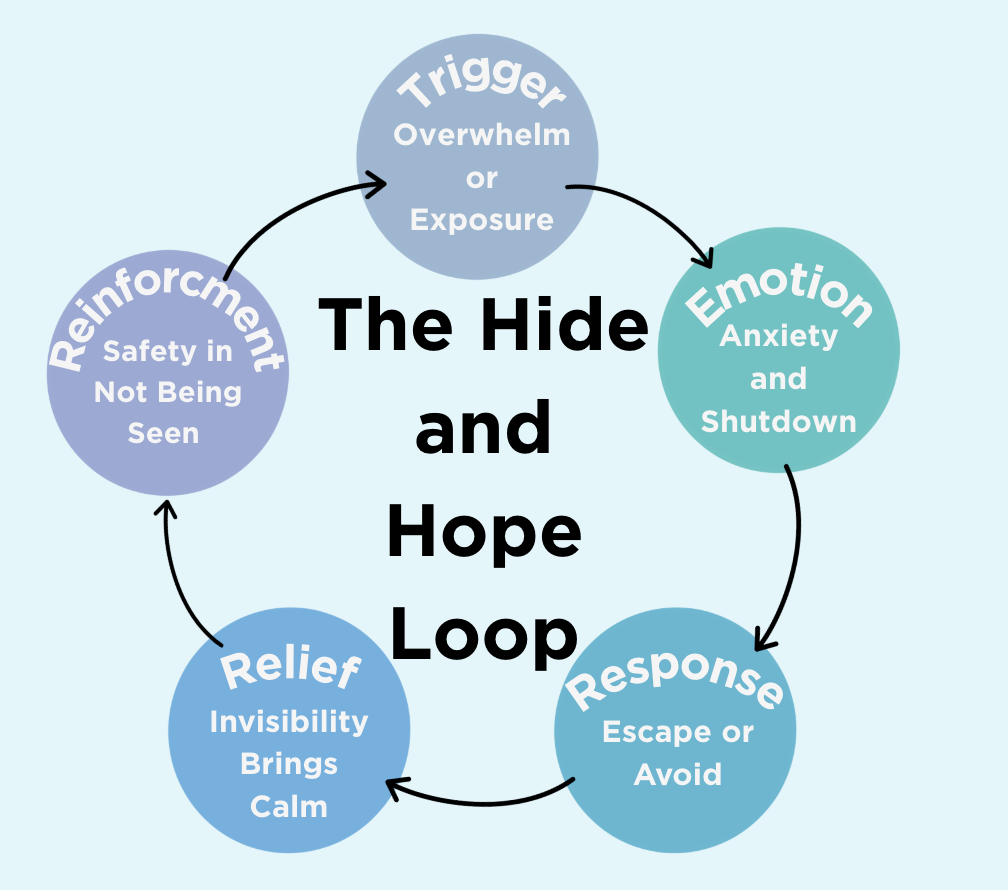
How The Hide and Hope Can Trigger the Thought Storm Loop
When withdrawl leaves too many unanswered questions
When the Hide & Hope loop pulls you away from a situation, the body may feel temporarily calmer, but nothing is actually resolved. Distance creates space — and that space fills with questions. Instead of engaging, your mind takes over, activating the Thought Storm Loop.
What happens:
- You begin thinking about what might happen next while staying disengaged.
- Your mind replays possible outcomes, conversations, or reactions from a distance.
- You analyze scenarios without taking action, trying to prepare yourself before re-entering.
- The body stays still, but the mind becomes increasingly active, looping through possibilities without relief.
How Hide and Hope Can Trigger the Peace Keeper Loop
When re-engaging feels risky
After time spent withdrawn, the idea of re-entering a situation can feel dangerous. To avoid making things worse, your system prepares to minimize impact. Instead of staying hidden, it shifts toward smoothing things over — activating the Peacekeeper loop.
What happens:
- You rehearse what you’ll say to avoid conflict or tension.
- You soften language, tone, or timing before re-engaging.
- You focus on how others might feel or react when you return.
- Relief comes from reducing the risk of disruption rather than expressing what you actually feel.
How Hide and Hope Can Trigger the Worth Proving Loop
When withdrawal turns into pressure to make up for it
When you’ve been withdrawn for a while, relief can fade and guilt can take its place. The longer you stay disengaged, the more pressure builds to compensate. Instead of staying hidden, your system shifts toward doing — activating the Worth-Proving Loop.
What happens:
- You start judging yourself for not responding, acting, or showing up.
- You feel a push to “make up for” the time you were disengaged.
- You throw yourself into tasks, productivity, or achievement to restore a sense of worth.
- Relief comes from doing something tangible, even if the original situation remains unresolved.
How Hide and Hope Can Trigger the Trauma Magnet Loop
When distance intensifies emotional attachment
When you pull away to feel safe, emotional space can actually heighten focus on certain relationships. Separation brings longing, curiosity, or unfinished emotional tension to the surface. Thinking keeps returning to the connection — activating the Trauma Magnet Loop.
What happens:
- You find yourself thinking about a specific person or relationship while staying withdrawn.
- You replay moments of closeness, loss, or inconsistency from a distance.
- Emotional pull grows even as you avoid direct engagement.
- You feel drawn to re-enter a familiar dynamic, even if it has caused pain before.