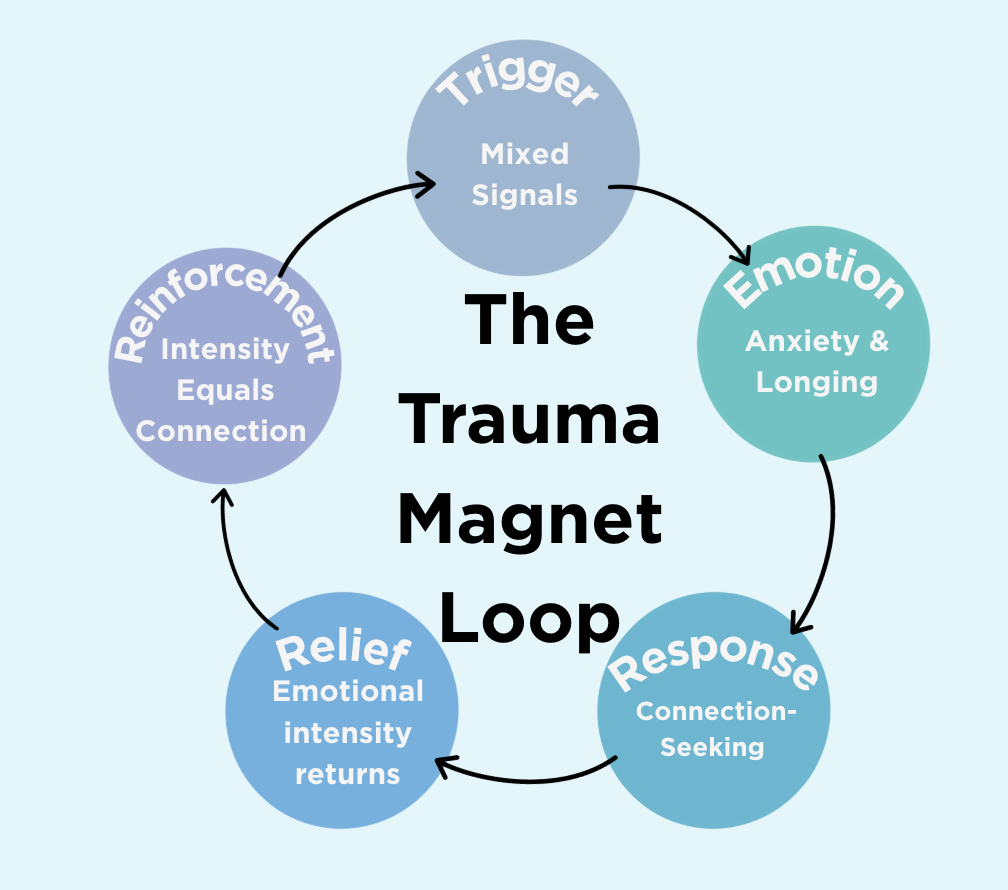
How Trauma Magnet Can Trigger the Thought Storm Loop
When uncertainty drives obsessive thinking
When trauma magnet behaviors fail to bring relief, the nervous system seeks control through cognition. The mind takes over to try to make sense of emotional pain.
What happens:
- You replay conversations, tone, timing, and perceived meaning.
- You analyze what went wrong, what they meant, or what you should have done differently.
- Your mind stays attached to the person even when the relationship is no longer present.
- Instead of resolution, thinking keeps the emotional bond alive and deepens attachment to familiar pain.
How Trauma Magnet Can Trigger the Peace Keeper Loop
When fear of loss activates self-silencing and over-accommodation
When the Trauma Magnet Loop pulls you into a familiar but unstable emotional bond, fear of abandonment intensifies. To preserve connection and reduce the risk of loss, the nervous system shifts into the Peacekeeper Loop.
What happens:
- You minimize your needs, feelings, or discomfort to keep the relationship calm.
- You over-accommodate, apologize, or emotionally manage the other person.
- You avoid conflict or difficult conversations out of fear they will push the person away.
- Instead of feeling safer, you become more invisible, reinforcing the belief that connection requires self-abandonment.
How Trauma Magnet Loop Can Trigger the Strong One Loop
When vulnerability feels unsafe after disappointment
When repeated emotional inconsistency leads to hurt or rejection, the nervous system may shift into self-reliance as protection. Depending on others starts to feel risky.
What happens:
- You minimize the impact of the relationship and tell yourself you’re fine.
- You shut down emotional needs or handle pain privately.
- You redirect energy into competence, productivity, or caretaking others.
- Instead of healing, emotional disconnection reinforces the belief that needing others leads to pain.
How Trauma Magnet Can Trigger the Hide and Hope Loop
When overwhelm leads to withdrawal and waiting
After rupture or emotional overload, the nervous system may collapse into withdrawal. Staying unseen feels safer than risking more hurt.
What happens:
- You pull back emotionally or physically without resolution.
- You avoid expressing needs, fear, or confusion.
- You wait silently, hoping things will improve without action.
- Instead of relief, the loop maintains longing and keeps the attachment alive through hope rather than connection.
How Trauma Magnet Can Trigger the Urgency Loop
When inconsistency creates panic and pressure to act
When the Trauma Magnet Loop is activated by mixed signals or emotional unpredictability, the nervous system interprets delay as danger. Urgency becomes a way to regain control and prevent loss.
What happens:
- You feel pressure to resolve things immediately or get reassurance right now.
- You over-text, push for clarity, or escalate emotional conversations.
- Waiting feels intolerable, even when slowing down would be safer.
- Instead of restoring connection, urgency increases tension and often recreates the rupture you fear.