How The Peace Keeper Can Trigger the Thought Storm Loop
When keeping the peace leaves too much unsaid
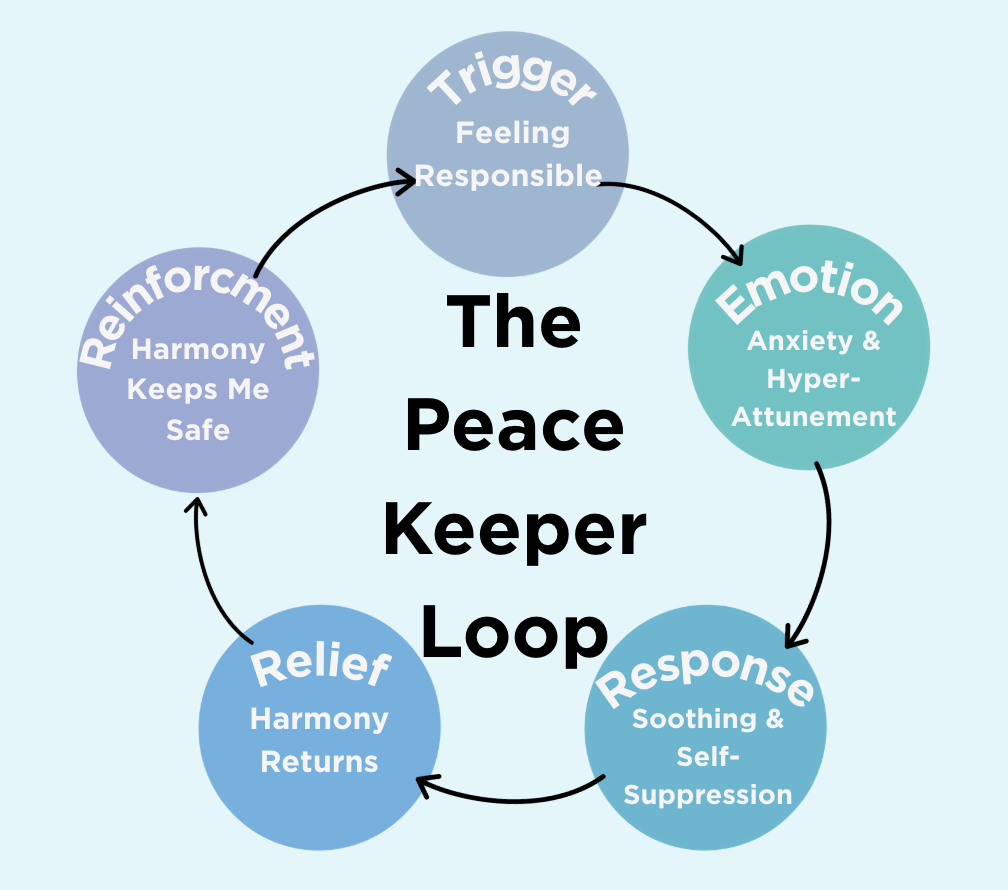
When the Peacekeeper loop smooths things over, the external tension may settle — but the internal experience doesn’t. What you didn’t say or do doesn’t disappear. Instead, it moves inward. Thinking takes over — activating the Thought Storm loop.
What happens:
- You replay the interaction, focusing on what you held back or softened.
- You analyze how things might have landed and whether you handled it the “right” way.
- You mentally rehearse what you wish you had said or what you might say later.
- The more you think, the harder it feels to re-engage, leaving you stuck in mental looping instead of expression.
How Peace Keeper Can Trigger the Strong One Loop
When harmony depends on you holding everything together
When peacekeeping becomes your role, responsibility increases. You may feel like things will fall apart if you don’t manage them. Instead of staying relational, the system shifts into self-reliance — activating the Strong One loop.
What happens:
- You take on more responsibility to prevent conflict or discomfort.
- You suppress your own needs to stay stable and capable.
- You stop asking for help to avoid burdening others.
- Relief comes from holding it together, even as pressure quietly builds.
How Peace Keeper Can Trigger the Worth Proving Loop
When being agreeable becomes a measure of value
When keeping the peace leads to approval or acceptance, worth can start to feel conditional. The system shifts from harmony to performance — activating the Worth-Proving loop.
What happens:
- You feel pressure to keep being easy, helpful, or agreeable.
- You do more to stay valued and avoid disappointment.
- You overextend yourself to maintain connection.
- Relief comes from effort and approval, not from being fully yourself.
How Peace Keeper Can Trigger the Hide and Hope Loop
When staying calm starts to feel exhausting
When the Peacekeeper loop is used repeatedly, engagement itself can begin to feel unsafe. Constantly managing tone, reactions, and harmony takes energy. Eventually, the system looks for relief by pulling away — activating the Hide & Hope Loop.
What happens:
- You feel drained from monitoring yourself and others.
- You start avoiding conversations or situations that might create tension.
- You go quiet or disengage instead of addressing what you need.
- Distance brings temporary relief, even though nothing is resolved.
How Peace Keeper Can Trigger the Trauma Magnet Loop
When harmony mirrors familiar attachment patterns
When peacekeeping has been tied to connection in the past, familiar dynamics can feel emotionally charged. Staying small to stay connected can pull you toward known relational roles — activating the Trauma Magnet loop.
What happens:
- You feel drawn to relationships where your needs take a back seat.
- You stay engaged even when the dynamic feels unbalanced.
- You confuse harmony with closeness or safety.
- The familiar pattern feels easier to stay in than to disrupt.