How Worth Proving Can Trigger the Thought Storm Loop
When rest activates mental pressure
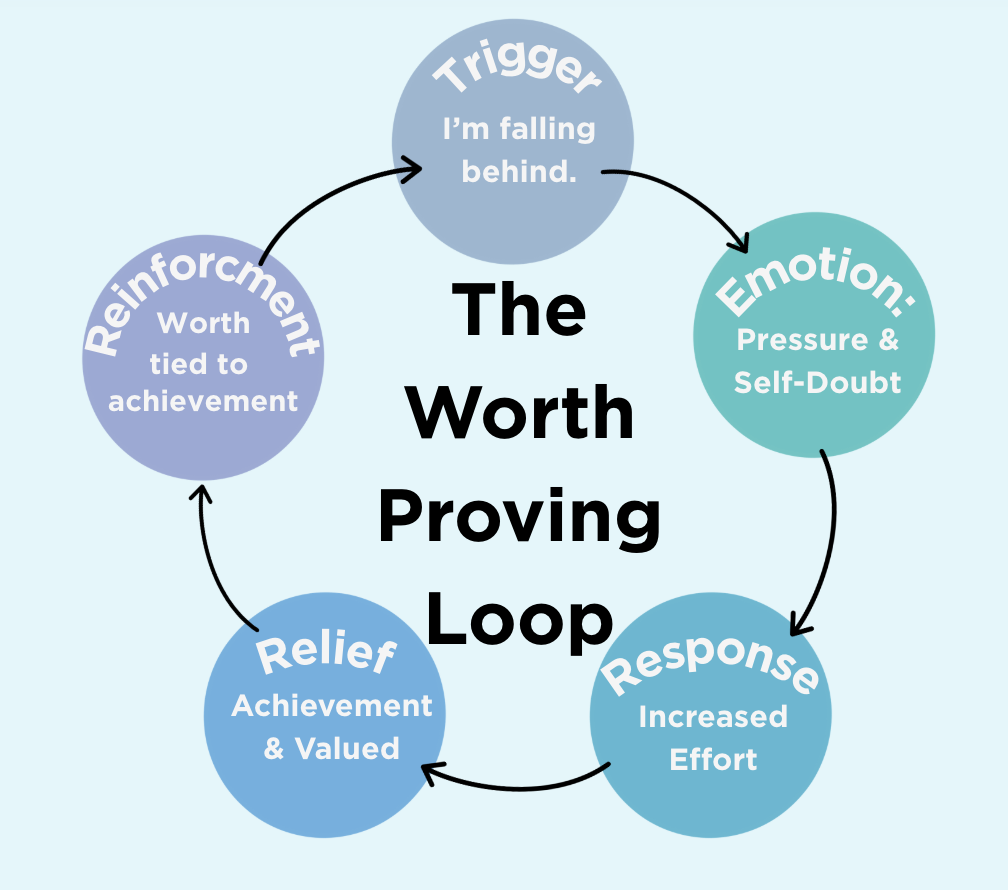
When productivity slows, the body may pause — but the mind doesn’t. Without constant doing, thoughts rush in to evaluate, measure, and question. The system shifts from effort to analysis — activating the Thought Storm Loop.
What happens:
- You replay whether you did enough or handled things well.
- Your mind focuses on what still needs improvement or what’s next.
- It becomes hard to mentally rest, even when activity stops.
- Relief is delayed as thinking replaces doing.
How Worth Proving Can Trigger the Peace Keeper Loop
When approval becomes relational safety
When being productive helps maintain acceptance, harmony becomes part of the strategy. The system shifts from achievement to accommodation — activating the Peacekeeper Loop.
What happens:
- You say yes to avoid disappointing others.
- You overextend to stay helpful or appreciated.
- You minimize your needs to maintain approval.
- Relief comes from keeping things smooth, not from authenticity.
How Worth Proving Loop Can Trigger the Strong One Loop
When value depends on capability
When effort earns stability or approval, self-reliance increases. The system shifts from proving to carrying — activating the Strong One Loop.
What happens:
- You take on more responsibility to stay valuable.
- You stop asking for help to maintain competence.
- You rely on yourself to keep things moving.
- Relief comes from handling everything on your own.
How Worth Proving Can Trigger the Hide and Hope Loop
When effort turns into exhaustion
When doing more becomes the main way to feel okay, the system eventually reaches its limit. Pushing past capacity creates fatigue and overwhelm. Instead of continuing to perform, the nervous system pulls away — activating the Hide & Hope Loop.
What happens:
- You feel drained after sustained effort and pressure.
- You disengage once expectations feel too heavy.
- You delay or avoid tasks you were previously pushing through.
- Relief comes from withdrawing rather than continuing to perform.
How Worth Proving Can Trigger the Trauma Magnet Loop
When effort becomes the path to connection
When love or approval has been earned through striving, familiar dynamics can feel emotionally charged. Working for connection pulls you toward known relational roles — activating the Trauma Magnet Loop.
What happens:
- You stay in relationships that require you to prove yourself.
- You try harder to earn consistency or closeness.
- You confuse effort with intimacy.
- The familiar dynamic feels easier to stay in than to question.
How Worth Proving Loop Can Trigger the Urgency Loop
When pressure to perform escalates
When worth feels tied to output, delays can feel threatening. The longer something takes, the more pressure builds to stay ahead. Doing turns into speed — activating the Urgency Loop.
What happens:
- You feel compelled to move faster to stay on track.
- You rush decisions to avoid falling behind.
- Waiting becomes uncomfortable or stressful.
- Relief comes from movement and progress, not from resolution.