Why Emotional Reactions Repeat: Understanding the Anatomy of a Loop
If you have ever thought,
“I handled that… so why do I still feel off?”
you are already touching the core of how emotional loops work.
Loops are not just reactions.
They are cycles—and understanding their anatomy explains why relief is so often temporary, and why one reaction seems to lead to another.
Every Loop Begins With an Emotional Signal
Emotions are not problems.
They are signals.
Each emotion is your nervous system communicating that something needs attention—safety, reassurance, connection, rest, clarity, or support.
But at some point, your system encountered emotions that felt overwhelming or unsupported. You did not yet know how to meet the need being signaled.
So your nervous system adapted.
It learned a response that reduced discomfort quickly.
That response became the beginning of a loop.
Step One: Activation
A loop starts when something in the present feels emotionally familiar.
This could be:
-
a tone of voice
-
a moment of conflict
-
uncertainty
-
distance
-
pressure
-
feeling misunderstood or unseen
Your body recognizes the emotional pattern before your mind does.
Stress hormones release.
Your nervous system shifts into protection.
And the loop activates automatically.
Step Two: The Protective Response
Once activated, the loop moves you toward a familiar behavior that promises relief.
That behavior might look like:
-
pulling away
-
pushing for answers
-
overthinking
-
fixing
-
staying quiet
-
staying busy
-
shutting down
These responses are not random.
They are protective strategies your system learned because they worked before.
Step Three: Temporary Relief
This is the part most people misunderstand.
The loop does not end because the problem is solved.
It ends because the intensity drops.
The moment you:
-
withdraw
-
get reassurance
-
gain control
-
avoid the conversation
-
feel understood
-
stop the uncertainty
your nervous system relaxes.
That relief is real.
But it is also temporary.
Because the emotional need that started the loop was never actually met.
Why Temporary Relief Reinforces the Loop
Your nervous system learns through experience.
When a behavior reduces discomfort—even briefly—it gets reinforced.
Your system thinks:
“This worked. Keep it.”
So the loop becomes faster, stronger, and more automatic the next time.
This is not self sabotage.
It is learning.
Step Four: The Leftover Emotion
Even though the pressure eased, the emotion underneath did not resolve.
Maybe you still feel:
-
resentment
-
sadness
-
loneliness
-
fear
-
guilt
-
shame
-
disappointment
These emotions linger quietly in the background.
And this is where things get complicated.
How One Loop Triggers Another
Leftover emotions are not neutral.
They become new signals.
For example:
-
Avoidance may bring relief, but leave loneliness
-
Pushing may bring clarity, but leave guilt
-
Overthinking may bring understanding, but leave exhaustion
-
Fixing may bring calm, but leave resentment
Each of these emotions can activate a different loop.
So the system moves from:
-
one protective response
-
to another
-
to another
This is why people often recognize more than one pattern in themselves.
It is not because something is wrong with them.
It is because loops stack.
Why Insight Alone Does Not Stop the Cycle
Many people understand their patterns intellectually.
They know why they react.
They see the cycle.
They promise to respond differently next time.
But loops do not live in thought.
They live in the nervous system.
Until the original unmet need is met in a new way, the loop has no reason to stop running.
How Loops Actually Change
Loops do not change by eliminating behavior.
They change when the system learns:
-
it is safe to pause
-
the emotional need can be met differently
-
relief does not require protection
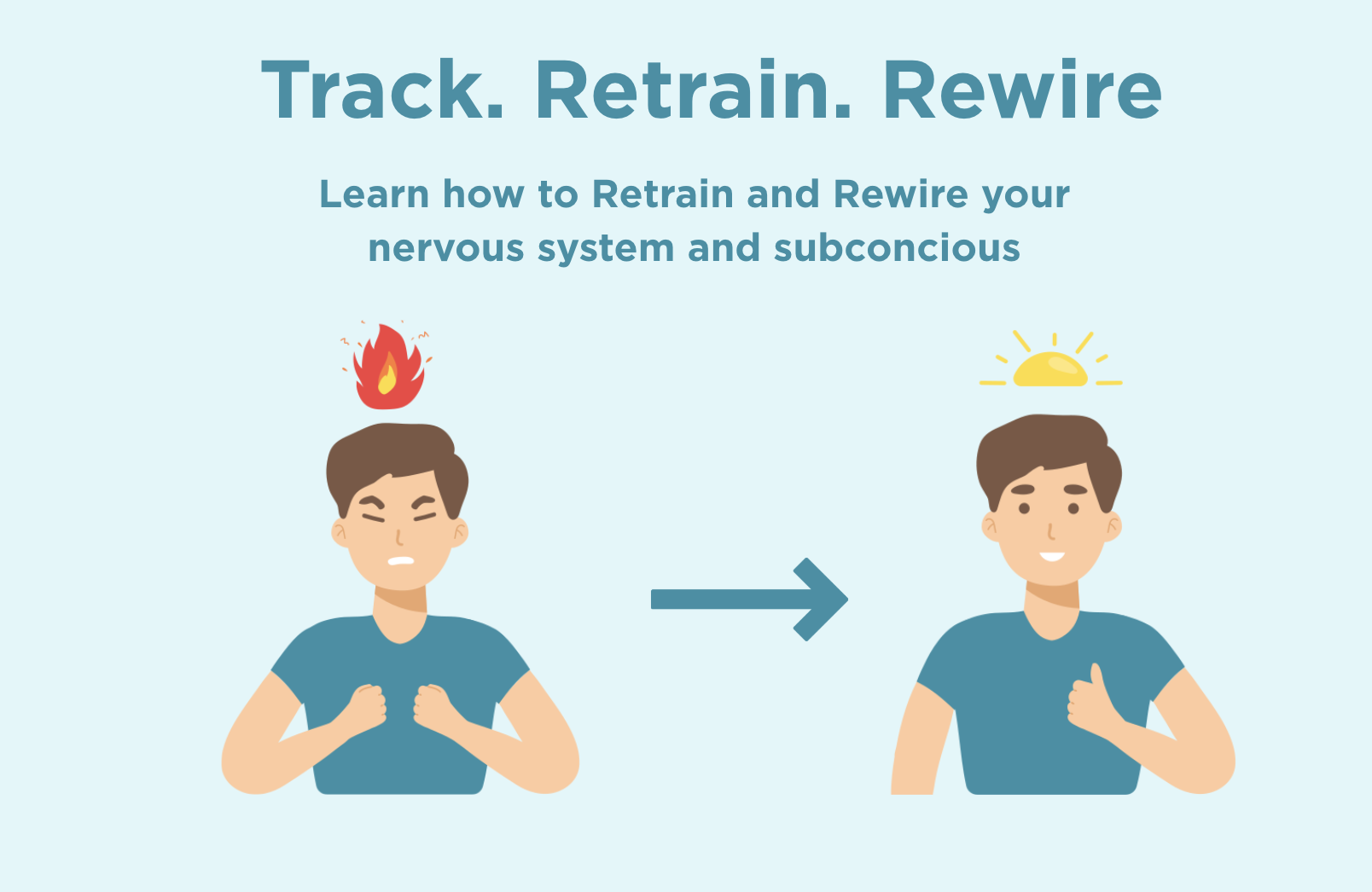
When you interrupt the automatic response and meet the unmet need directly, the loop no longer serves a purpose.
Over time, your nervous system updates.
The response that once felt automatic begins to soften.
The chain reaction slows.
New loops stop forming.
The Key Insight
Loops are not problems to fix.
They are systems trying to protect you.
Temporary relief is not failure.
It is information.
When you understand the anatomy of the loop, you stop fighting yourself and start working with your system instead.
That is where lasting change begins.
Take our free quiz: Why do I react this way to find your loop.